

Before & After Photos
Click on a photo to enlarge.
Coastal Crawl Space Gets Encapsulated in Bayville, NJ
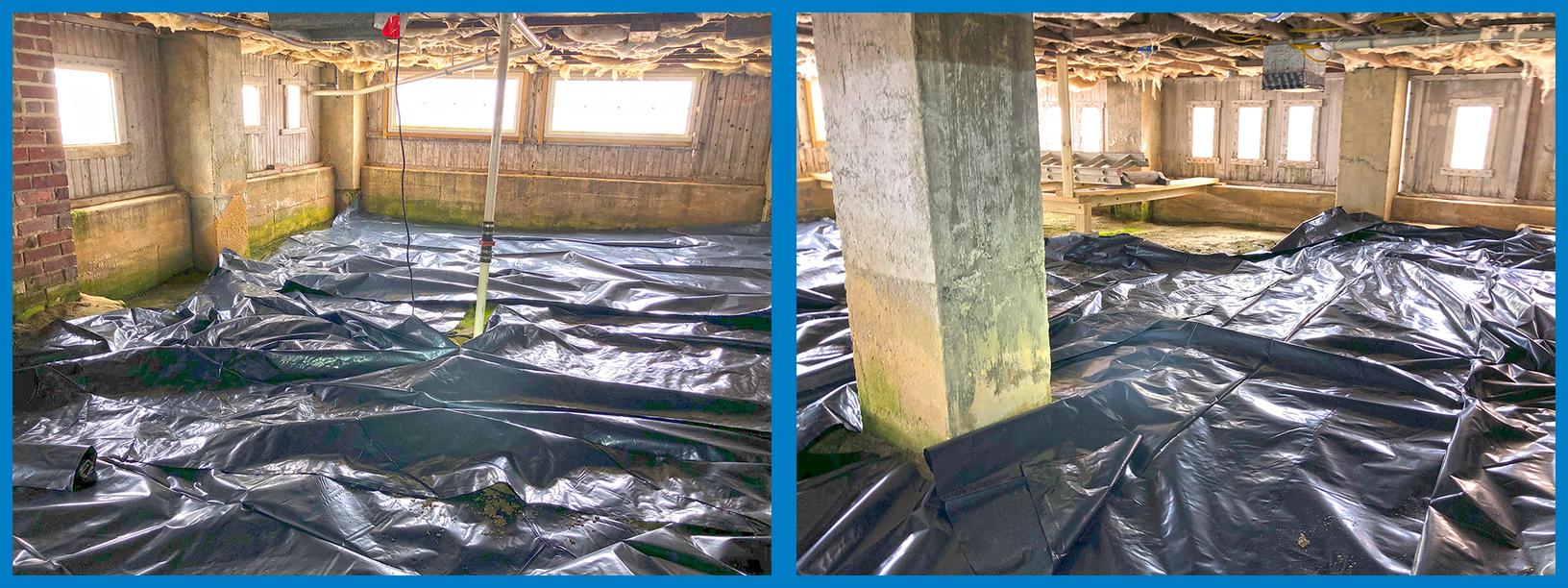

Recently, we went on a service a call in Bayville, NJ for a homeowner who was complaining of an excessive amount of moisture in his crawl space. Excessive moisture in your crawl space can have a major impact on your family’s health. In fact, 40% of the air in your home comes up through the crawl space — which means that moisture and mold can seep into your home, where you're breathing it in.
Once we arrived at the property, we equipped our personal protective equipment (PPE) and began our inspection. After surveying the crawl space, we noticed that the homeowner had a dirt floor crawl space and that his home was located right on the bay. Dirt floor crawl spaces attract and absorb moisture. When the dirt dries, it causes humidity levels to rise in your home. After a thorough inspection, we determined that this was the cause of the moisture build-up in the crawl space.
The best treatment method to remove the moisture is to encapsulate the crawl space. First, we installed a vapor barrier. A vapor barrier is a super-durable, 20-mil 7-ply plastic sheet material made up of high and low-density polyethylene with polyester-cord reinforcement. The vapor barrier resists the passage of air and by stopping air movement from the ground, it can also turn your crawl space into a semi-conditioned space. Next, we removed the existing fiberglass insulation and replaced it with encapsulated comfort thermal insulation. Then, we installed a smart pump with a battery back up and auxiliary pump to remove any groundwater underneath the liner.
Finally, in order to prevent mold growth, we installed a SaniDry XP commercial dehumidifier. These machines are specifically designed and manufactured for the challenging environments of basements and crawl spaces. The SaniDry XP is a powerful energy-efficient dehumidifier that outperforms standard household dehumidifiers by as much as 10 times while using the same amount of energy to run. The SaniDry XP can effectively cover indoor living spaces over 3000 square feet, making it well-suited for basements and crawl spaces over 40” high.
Now, the moisture in the crawl space is greatly reduced, helping prevent mold growth.
Crawl Space in Need of Encapsulation in Farmingdale, NJ
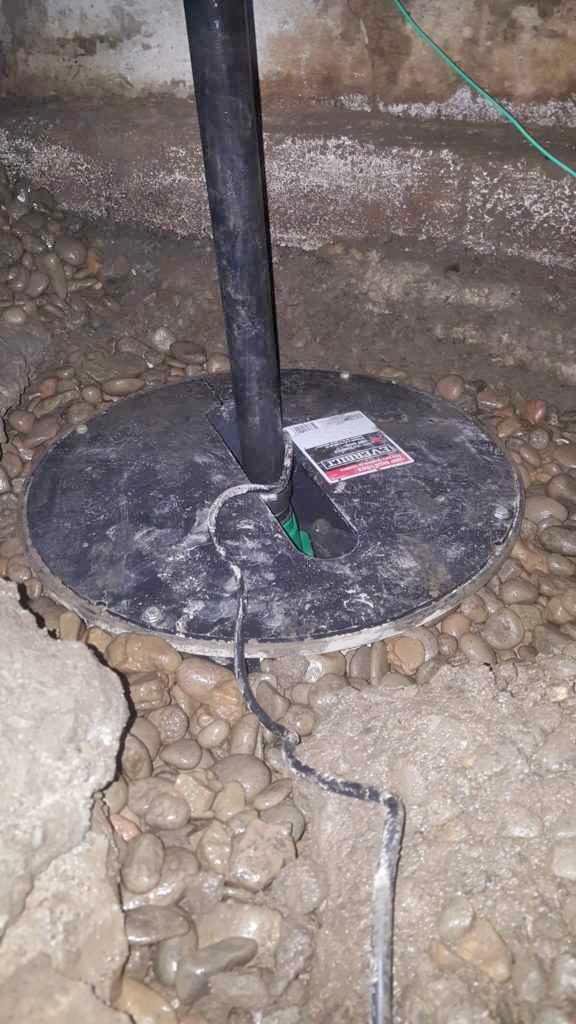

April showers bring May flowers, including heavy rains into crawl spaces! Recently, we received a call from a homeowner in Farmingdale, NJ who had an issue with their crawl space. During heavy rainfall, their crawl space kept getting flooded and the sump pump wasn’t working properly. Not having a clean crawl space can have a major impact on your family’s health in so many ways. In fact, 40% of the air in your home comes up through the crawl space. This means that moisture, mold, dust, and pathogens can seep into your home, where you're breathing it in. Asthma or allergy symptoms could be a response to this. Once we arrived at the property, we put on our Personal Protective Equipment (PPE), full-face respirator masks and began our inspection. After thoroughly inspecting the crawl space, we discussed with the homeowners what they needed. A crawl space encapsulation.
Crawl space encapsulation eliminates moisture, prevents damage from moisture, keeps unwanted critters out, and saves you money on your utility bill. First, we removed all the debris out of the crawl space. Then we laid down drainage matting which will allow any water to work its way over to the sump pump. Once that was done we dug a hole to remove the old sump pump and installed the new sump pump. Then we filled the outside of the hole with stones to allow water to make its way into the sump pump. Finally, we lined the entire crawl space with a vapor barrier liner. The vapor barrier is a 20-mil 7-ply sandwich of high and low-density polyethylene with a polyester-cord reinforcement. It's also treated with an antimicrobial finish that protects against mold and mildew growth. This vapor barrier is made-to-take-a-beating and is puncture and tear-resistant. Now the homeowner will no longer worry about their crawl space getting flooded.
New crawl space access door in Colts Neck


The Cowleys home improvement crew was sent to a home in Colts Neck to remodel the homeowner’s outdoor access to his crawl space. His old crawl space entry was cumbersome to open and close, and even worse, it provided virtually no protection from the outdoor elements. Whenever it rained, the current crawl space access allowed a stream of water to rush inside. The homeowner was concerned about standing water in the basement and the problems it could cause, and rightly so. Standing water in the crawl space is an open invitation for mold growth and is an attractant for mosquitoes, other insects, and all sorts of wildlife.
We wanted a crawl space access that was easy to use, blocked rainwater from entering, and provided protection from the outdoor elements. To meet these objectives, we replaced the entry cover with one of our Everlast doors. These Everlast vent covers completely block outside air and moisture from entering the crawl space. They can be installed against wood framing or masonry, work exceptionally well, and are aesthetically pleasing. Made with a hard durable plastic, they stand up to the worst weather conditions, and are completely maintenance free. They should never rot, warp, or crack and they never need to be painted. From out experience, they are virtually indestructible. Also, if you or a repair person needs crawl space access, they are easy to open. All you need to do is twist a few easy-to-grip knobs, and you’re in!
Given this homeowner’s water issues, we wanted to have a second barrier to prevent water entry. We decided to install a product manufactured by the Bilco Company, which makes a variety of USA-made specialized doors and other specialty access products for the building industry, including the StakWEL window well.
What’s a window well? And why would Cowleys want to install a window well around a crawl space door? Glad you asked!
Most basements have windows, especially finished basements since it’s nice to have some natural lighting and a way to let in outdoor air. Windows installed in basements that are mostly below-grade require window wells — those semi-circular “dig-outs” you find on the basement window’s exterior. This well needs to be supported by some materials or it will eventually collapse.
Window wells help prevent water penetration around the window framing and window damage (Basement windows are prone to damage since they are at or near ground level.). Window wells also allow for emergency egress out of the basement. This is important because most local building codes require basement windows to provide emergency egress, in which case, the well needs a built-in steps or ladder. Window wells should also have covers to keep out leaves and debris and help prevent water and snow from collecting inside the well.
We decided to install a window well around this crawl space door for many of the same reasons that a homeowner would want to install one around their basement window. This homeowner was having a serious water intrusion problem whenever it rained. The safest course of action was to give him a second barrier in addition to the Everlast door, and the StakWEL window well fit the bill perfectly. It’s is made out of a tough corrosion-resistant high density polyethylene, and it’s modular, which greatly simplified installation. As a bonus, these wells have a grip-step design so you don’t have to have the agility of a mountain climber to enter and exit the crawl space access area. The window well also has an optional cover for extra protection against the elements.
After we were done, the remodel of this crawl space access looked great, and we are confident that his water issues will finally be over. The homeowner was quite pleased, and he said that he’d let us know after the first heavy rain how his crawl space was holding up. We expect to here nothing but good news!
A Builders Gap in Roof is an Open Invitation for Birds in Colts Neck, NJ


We went out on a service call for a homeowner in Colts Neck, NJ who was hearing birds chirping in his attic. As we arrived and began our inspection along the roof we discovered a severe "roofline gap" or a "builders gap.” This term refers to when the roof decking is left slightly shorter than the rafter ends creating a gap between the roof and the gutter. Although covered by a layer of shingles this gap extends the full roofline of your home and is an ideal place for wildlife and birds to enter.
The gap was located under the last tab of shingles where the plywood meets the fascia board (the board behind the gutter). As we examined the gap, we found several birds nest inside. Birds nesting in your attic isn’t just annoying but is hazardous to your health. The nesting material they use can harbor many different types of parasites, including bird mites. Bird mites are microscopic parasites that feed on the blood of birds. They have flat, oval bodies, and are nearly white when unfed, but become bright red when recently fed. Once birds have abandoned their nests, bird mites migrate indoors from an abandoned nest, entering through the attic via openings in the ceiling or interior wall surfaces, and feed on the blood of humans.
For treatment, we sanitized the nesting areas with a product that specifically targets bird mites and then carefully removed all the nests. Next, we installed a product called "leaf proof" all along the roofline gap. A leaf proof is made of an aluminum metal that slips under the bottom of the last shingle in between shingle and plywood and attaches to gutter with a small screw. This product still allows the water to run into the gutter but blocks and protects from birds and other animals from accessing the attic area. Now the homeowner's attic and gutter are properly protected from invasive wildlife and birds.
Mice find easy entry in exterior gaps in Keansburg


As temperatures drop, mice will seek refuge in your home to escape the harsh winter elements. For a mouse, your home is paradise — it’s always warm and cozy, there are plenty of nooks and crannies to hide, there’s plenty of nesting materials, and your kitchen offers an unlimited food supply. ,
Whenever we are called out to resolve a rodent infestation, we not only treat the infestation. It is critical to determine how these disease-carrying animals are accessing your home. Here, in this home in Keansburg, I determined that mice were gaining access through gaps around AC lines entering the home. Utility and telephone lines entering your home to are common access points for small rodents like mice and they are always on the top of my “must inspect” list. A small gap around wiring or pipes that we easily overlook is, for a mouse, a wide-open entrance way that offers 24/7 access into your home. Unfortunately, because of their diminutive size, mice can slip through the smallest of gaps and cracks, and these openings can sometimes be a challenge to find. I set up traps in the home and sealed the entry point to prevent further access. These pictures show the “before and after” sealing of this entry point.
I’ll be returning for a follow-up visit in two weeks to make sure that these overwintering mice are gone for good.

