

Before & After Photos
Click on a photo to enlarge.
Cracked Chimney Gets Sealed in Hazlet, NJ


After we finished installing chimney caps on this homeowner's property, we couldn't help but notice that the chimney was in bad shape. The cracked bricks on the chimney can let moisture in, which will lead to mold problems and even a pest infestation.
After bringing this to the owner's attention, we used a crown seal on the chimney to prevent these issues. Crown seal is a proprietary elastomeric coating that is specifically formulated to repair and protect chimney crowns from water intrusion. Now the chimney is protected from any type of moisture or pest issue.
No More Raccoons Getting Into the Attic in Hazlet, NJ
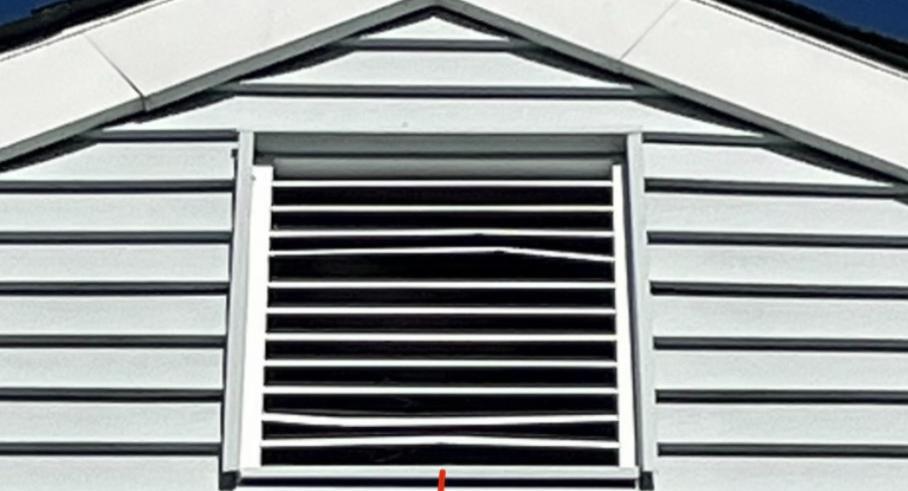
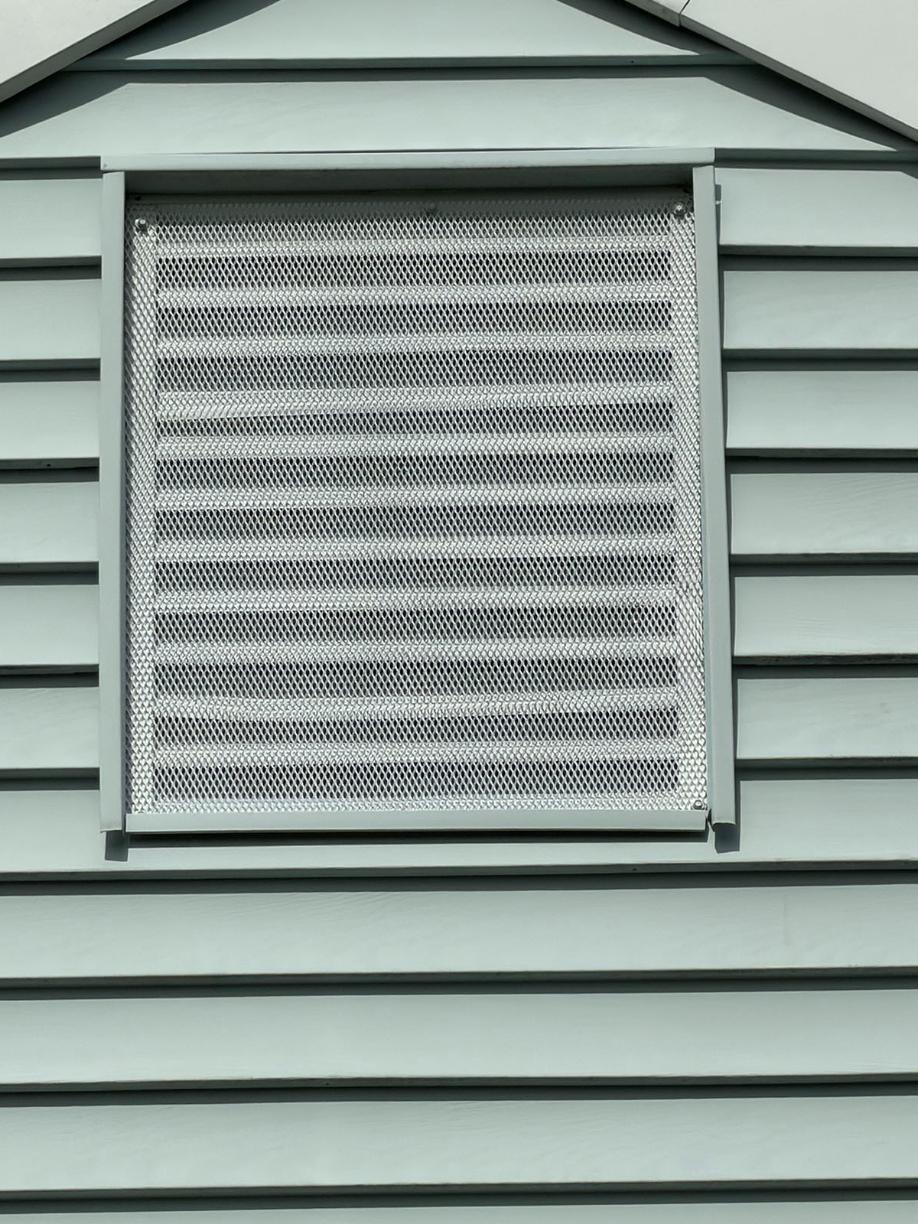
We recently were sent out to a home in Hazlet, NJ to remove a raccoon. The raccoon was able to get into the attic through the weathered gable vent. A short while after setting up our retrieval devices we successfully and safely retrieved the raccoon and took it to a humane location. Now we need to make sure the raccoons (or any other nuisance wildlife) don't get back into the home through this area.
To accomplish that, we fashioned a louvered vent guard and installed it over the gable vent. A louvered vent guard is made out of heavy-duty Galvannealed steel (which means it won't rust) and is customized to accommodate vents of all shapes and sizes! Now the gable vent is properly protected from all types of nuisance wildlife, bats, & birds.
Raccoon Repair Damage in Lincroft, NJ


Recently, a homeowner in Lincroft NJ, contacted Cowleys because of raccoon activity in the upper dormer area of the home. Raccoon weight can vary considerably with habitat, but they generally weigh around 20 pounds, making them one of the largest nuisance wildlife that we deal with on a regular basis. These nocturnal animals are extremely intelligent, resourceful, great climbers, and with their human-like five-finger forepaws, they are amazingly dexterous. A determined raccoon will find a way to get into your attic, especially when the female is looking for a quiet, private nesting area to give birth to her kits. Raccoons, especially protective moms, are territorial and can be vicious when confronted. They are also the major rabies vector in New Jersey.
With nuisance wildlife infestations, we always determine how the critters are gaining access into the home. Because of the size of raccoons, their entry point is generally pretty obvious. Here, the raccoon was entering through the fascia area right below the roofline. Fascia boards are often exploited by wildlife because they are often weakened from water damage from the roof and gutters, and the outdoor elements. Raccoons can easily tear through these materials to gain access to the attic.
After ensuring that there were no pups inside the home, we set up traps and repaired the damaged fascia by framing in the hollowed-out area and then installing new fascia material. When we were done, the home looked as good as new!
Large hornets nest near hot tub in Holmdel, NJ


Recently, I was dispatched to a home in Holmdel, NJ that was having a problem with some “large wasps” that had taken up residence, of all places, behind the slats of a hot tub. Upon, arrival, I immediately determined that these homeowners were dealing with a European hornet infestation. These are one of the larger stinging insects that we regularly encounter. They can grow to about one inch long, making them one intimidating stinging insect! Because these insects have some yellow in their markings, they can be easily confused with yellow jackets. However, they are much larger, thicker insects than the slender yellow jacket. Also, unlike yellow jackets, European hornets usually has some orange in their coloration. Like all social wasps and hornets, European hornets are aggressive and territorial if they perceive that they are being threatened. As far as stinging insects go, both yellow jackets and European hornets are similar in that they both have nasty temperaments and won’t hesitate to use their stingers.
Unlike baldfaced hornets, paper wasps, and other stinging insects, European hornets rarely build suspended nests attached to tree limbs, roof eaves, and other locations in plain view. Instead, just like they did here, these insects usually build their nests inside a hole or cavity. The location of their nests can make them difficult to reach and treat. Sometimes, these hornets will enter homes for shelter, finding entry point through eaves and vents where they then form nests, commonly in wall voids and in attics.
Here, I promptly located where these hornets were nesting inside the hot tub. First, I treated the nest with a dust that quickly knocks down the population. After waiting until I observed no more active insect activity, I successfully removed the nest. As shown in the photo, the nest was broken into numerous pieces because I had to pull the nest out piecemeal from inside the hot tub. Since the nest was cracked open, you can clearly see the hundreds of combs inside the nest that housed the hornet larvae. I collected all of the nest pieces, bagged them, and took everything with me so there was no remaining nest debris. Now, these homeowners can resume the use of their hot tub without feeling threatened by these large stinging insects.
Birds Will No Longer Nest Under the Solar Panels in Holmdel, NJ
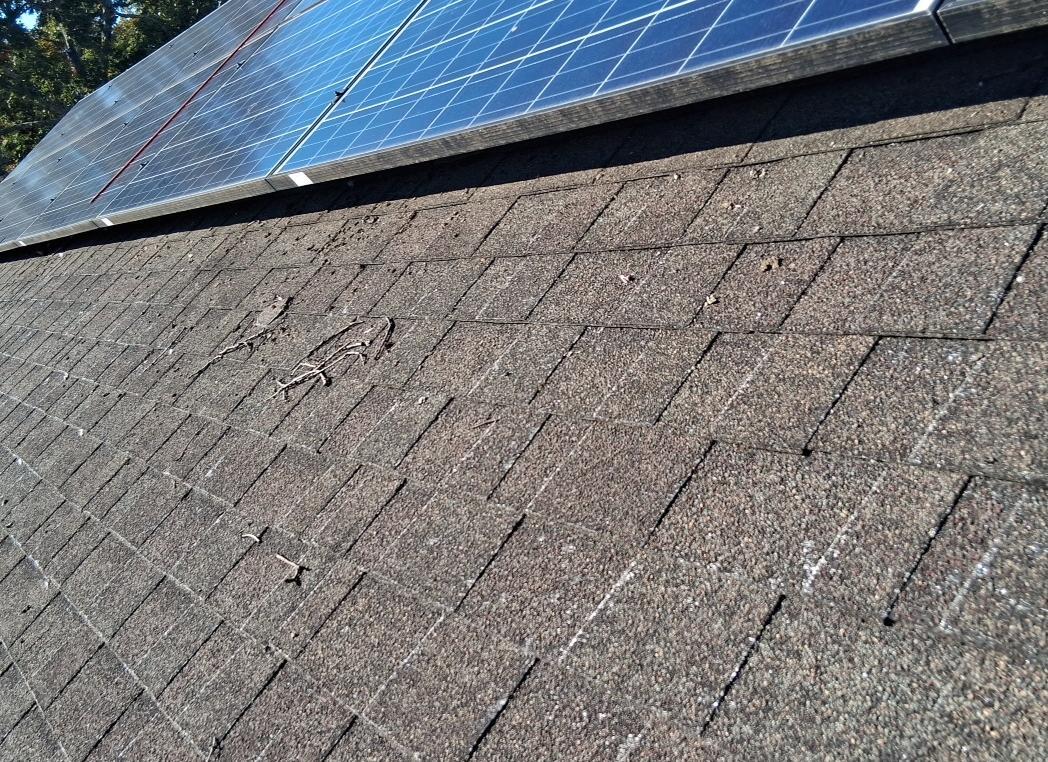
This customer in Holmdel, NJ earlier this year had solar panels installed onto his new roof. A few months after getting them installed, nuisance birds decided to roost underneath them and defecate all over this new roof! He didn't want to see his new investment get ruined so he contacted Bird Solutions by Cowleys and we were sent out to help.
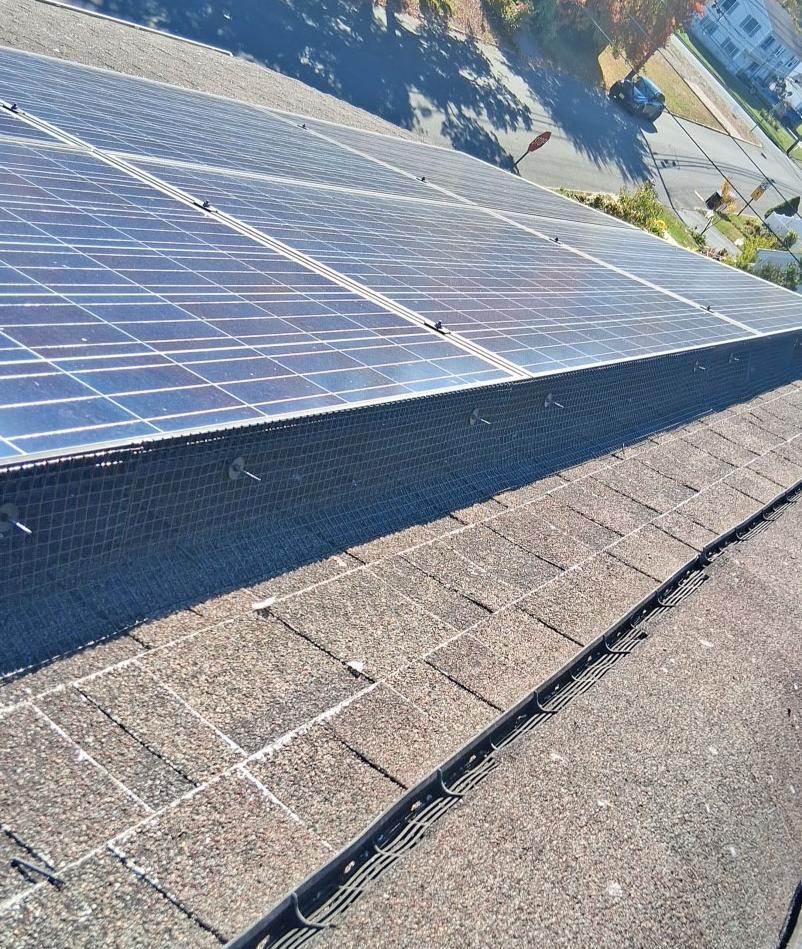
First, we carefully removed all the nesting debris underneath the solar panels and then disinfected the areas with a solution that targets bird mites. Bird mites are parasites that feed on the blood of birds and are the main reason why extreme care is needed when removing a nest. Next, in order to prevent the nuisance birds from nesting underneath the solar panels, we installed our solar panel exclusion kit around the entire perimeter of the solar panels.
This kit creates a physical barrier to keep birds from accessing and nesting in the area beneath the solar arrays, protecting the roof and equipment from damage. Now all nuisance birds will have nowhere to nest they'll no longer be attracted to the home and the solar panels will be protected from further intrusions from all types of birds and nuisance wildlife.

