

Before & After Photos
Click on a photo to enlarge.
Raccoons going in and out of storm drain in Hopewell, NJ
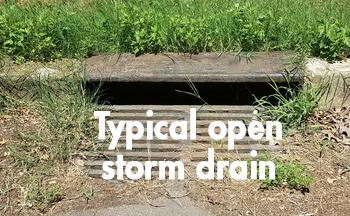

These homeowners in Hopewell, NJ. found themselves with a raccoon infestation on their property. While the raccoons did not make their way inside the home, it is stressful even to see these large animals scavenging around your property. Here, they were crawling in and out of storm drains around because the grates had a gap that was large enough for the raccoons to gain access.
Wildlife has a way of exploiting weaknesses in a structure in order to gain entry. Often, its water-saturated, rotting fascia, soffit boards, or roof shingles. Other times, the weakness is a structural opening like chimneys or storm drains that do not have an adequate protective covering to block access. For this homeowner, I installed six storm grate covers that would keep out raccoons and other larger wildlife from entering the drains. I’m confident that by blocking these gaps, the raccoons will move off the property to find another home.
Unfortunately, we weren't able to get a good before image, so here we show a typical open storm drain.
Crawl Space Goes from Dirty to Healthy in Montgomery, NJ


After purchasing her new home, this resident in Montgomery, NJ wanted to add some much-needed storage space in her crawl space. The issue was that her crawl space had a dirt floor and was filthy. She contacted our Contracting division and wanted us to encapsulated her crawl space.
First, we leveled the ground for proper draining and installed drainage matting. This material is a dimpled plastic mat that allows all excess moisture to work its way over to the new sump pump we installed. Next, we installed a vapor barrier, which is a heavy-duty, 20-mil 7-ply sandwich of high and low-density polyethylene with a polyester-cord reinforcement. It's extremely durable, treated with an antimicrobial to prevent mold, and is installed over the foundation walls and floor to create a continuous air and moisture barrier.
Afterward, we installed SilverGlo™ on the walls of the crawl space, which is a waterproof foam insulation that seals the walls from outside moisture and humidity. Lastly, we installed a Sani-Dry Sedona commercial-grade dehumidifier. The Sedona directs the extracted water pulled out of the air directly into the sump pump and will control the humidity levels in the crawl space.
Bat's find easy access to Princeton, NJ home


This homeowner in Princeton, NJ found herself with bats nesting under the fascia leaving guano (the excrement of birds and bats) deposits all over the deck. Bat guano happens to be an excellent organic fertilizer because of its high nitrogen and phosphorus, but it is also a health hazard. Bat and bird guano can contain numerous pathogens including a fungus that causes histoplasmosis, a serious chronic lung disease, and exposure, Including breathing in these airborne particles, is dangerous for homeowners. Also, bats are major carriers of rabies. Bat infestations need to be removed and professional experienced in excluding bats from nesting in your home should be brought in. This is not a DIY project and you should not be working in a bat-contaminated area without proper protective equipment. For this home, I completely covered the fascia with a metal barrier to keep them from roosting in and between the fascia board.
Eliminating yellow jackets in Princeton, NJ
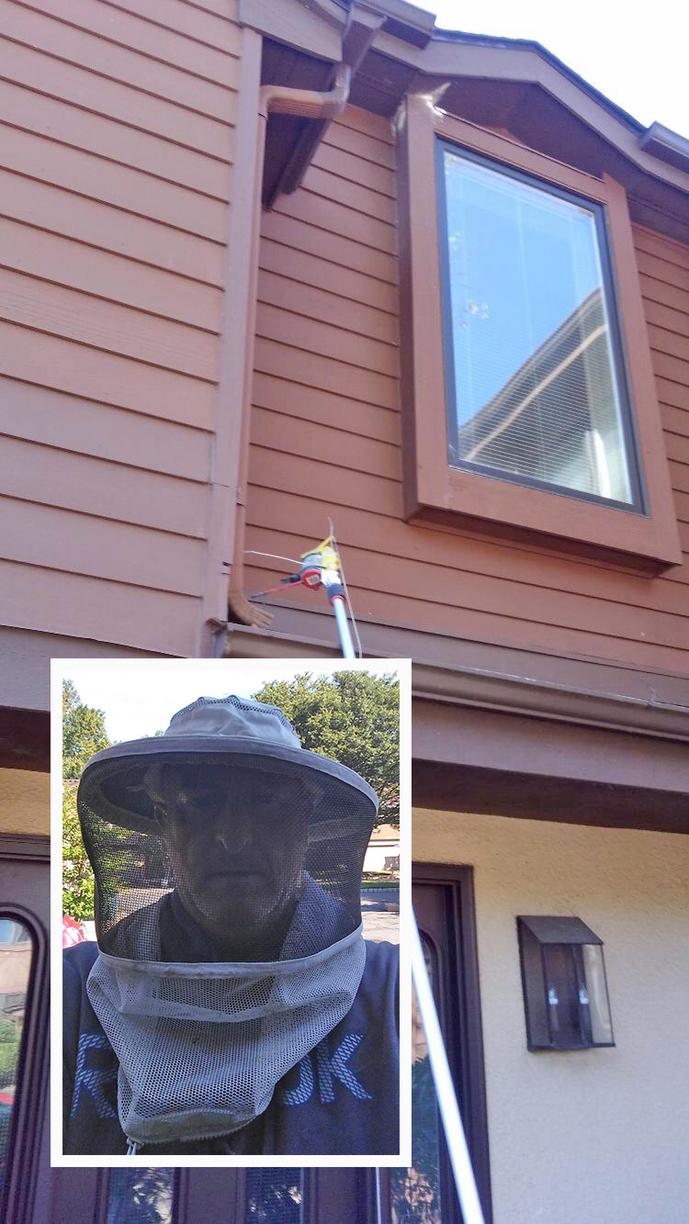
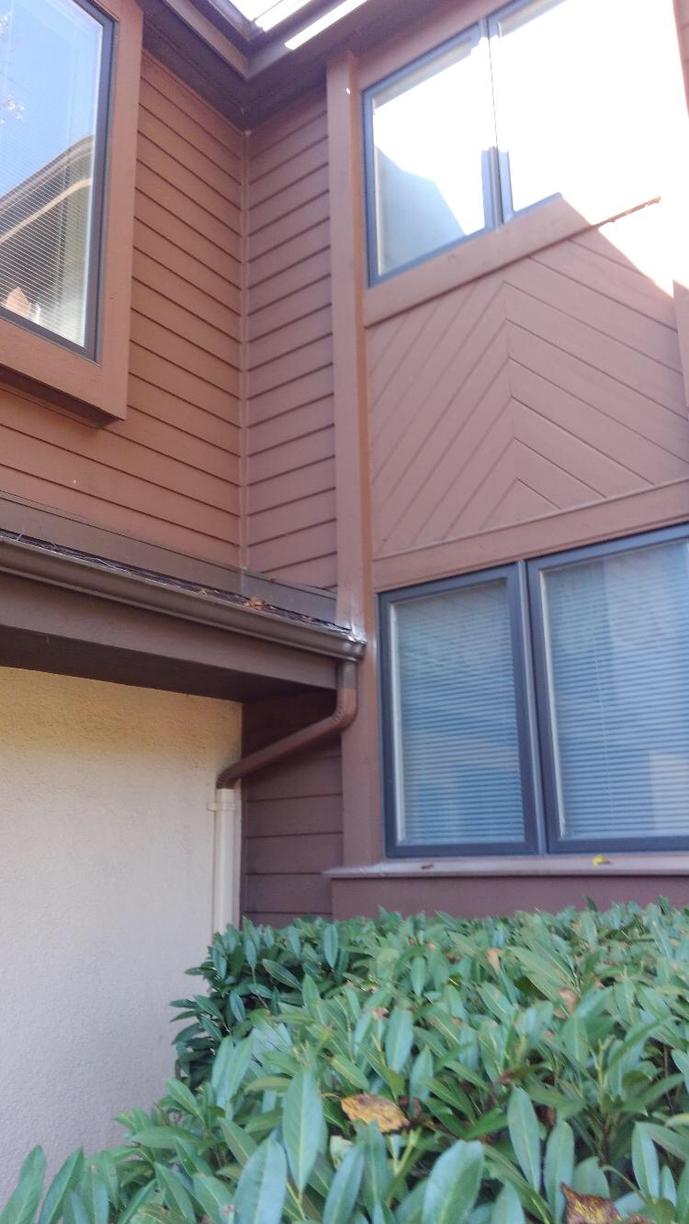
Recently, I was sent to a homeowner in Princeton, NJ who was having a problem with yellow jackets. It’s bad enough when you see these nasty stinging insects flying around outside your home, but here, it was even worse. They had made their way inside one of the downstairs rooms.
I needed to determine how they were gaining access inside the home, and start with an exterior perimeter inspection. I observed yellow jackets flying in and out of an opening in the siding. Yellow jackets are ground-nesters. They usually build nests inside cavities. Often, we find them in hidden locations such as rodent burrows, behind bark, or in hollowed-out stumps. They also make use of man-made structures and will build their nests attached to eaves, or like here, behind siding. Yellow jackets are strong, hardy insects that are powerful enough to chew through drywall and even plaster, so they can make their way from wall voids into the living areas of home, a frightening experience for any homeowner, to say the least. These yellow jackets were likely nesting up in a ceiling or in a wall void, and a mature nest can grow to be quite large with several thousand members. The little bit of good news was that, according to the homeowner, no one in the household was allergic to wasp stings. Nevertheless, yellow jackets are aggressive, territorial wasps. They often sting without provocation, and their stings pack a wallop. It was important to have this infestation resolved quickly.
I treated the opening with a highly effective dust that will be carried back by the foraging wasps to the nest, spreading throughout. The residual dust will continue to work for months, killing any emerging wasps. This hidden nest should be completely neutralized within a day, and this family will no longer have to worry about these stinging insects.
Challenging raccoon trapping job in Kendall Park, NJ


Raccoons, although they walk on all fours like most mammals, have human-shaped paws with thumbs, not to mention razor-sharp claws. Because of their anatomy, these animals are amazingly good climbers. They are able to climb and walk on a much steeper roofs than we can. Unless you are a skilled rock climber, most of us regular folks have limited grip strength relative to our body weight, and none of us have a nice set of claws to dig into materials.
This wildlife job for a homeowner in Kendall Park, NJ was particularly tricky, and it took some extra planning because of this home’s steep pitched roof. To make matters even more challenging, there wasn’t much space between the house, and the ladder angle was a bit steeper than I would have liked. To solidly secure the ladder, I was able to ”foot” it right up against the bottom of the fence, so it would not "kick out" while I was on it.
Buttressed by the fence, this ladder would not budge on inch, and I had plenty of of security to work with my hands off the ladder without worrying about whether it would move while I was on it. I installed a “positive” set up. With this type of set up, any animal has no choice but to go through the trap, no matter if it's coming or going from the home.
The raccoon was soon trapped, and I safely relocated him far away from any human habitats. After trapping the trespasser, I closed off the access into the home in order to prevent any further wildlife intrusions. All in all, this was a satisfying job with a great resolution and a very happy homeowner who could now enjoy his home without sharing it with a destructive raccoon!

